Many Shopify owners face issues such as low traffic, cart abandonment and poor conversion rates- leaving them thinking why they are unable to generate sales.
The reality is that without the right strategies in place, even if you have the most visually appealing store, you will fail to convert visitors into buyers.
But don’t worry. In this article, we will explore the 12 best ways to get sales on Shopify.
Let’s get started!
12 Ways on How to Increase Sales on Shopify
In order to get more sales on Shopify, implement the right strategies to attract, engage and convert your visitors into loyal customers.
Here are the 12 practical and effective ways to boost your sales on Shopify:
1. Leverage Social Proof to Build Trust
Social proof, like reviews and testimonials, taps into the natural tendency of people to follow what others are doing. It also gives them the confidence that they are making the right purchase.
Stores that use social proof to grow sales on Shopify stores, which helps to improve conversion rates by up to 15%. So, leveraging social proof is a no-brainer. There are several Shopify apps designed to build social proof. They help to enhance credibility and trust by showcasing customer reviews, ratings, and real-time purchase activity on your store.
One practical way is to use the Shopify Recent Sales Pop-up to show real-time notifications of recent purchases in your store. It is fully customizable, so you can match the design of the popup with your store’s theme and increase the conversion rates of your Shopify store.
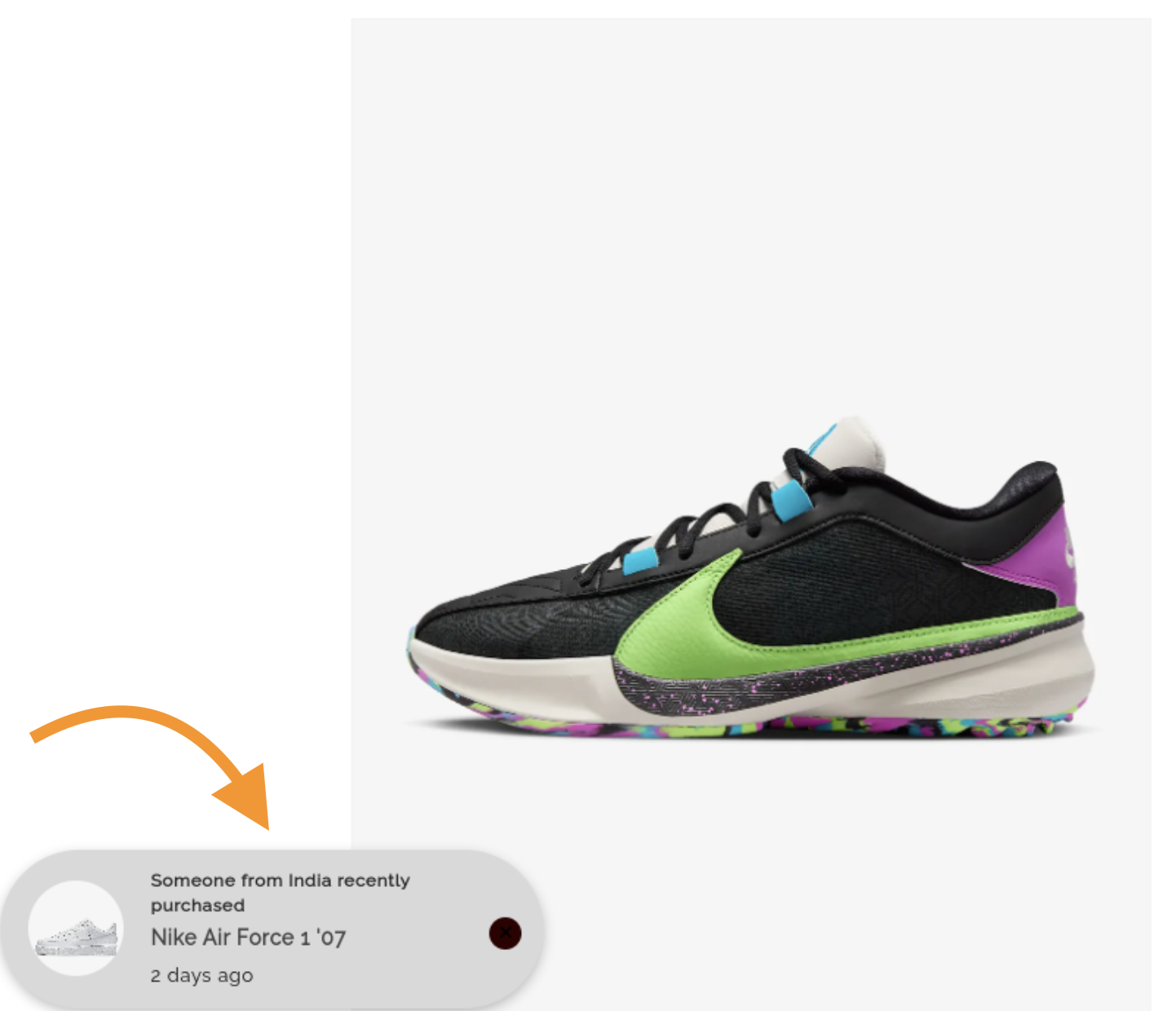
Display real time purchase notifications of recent purchases & improve visitors trust.
Shopify Recent Sales Pop up
2. Use Scarcity and Urgency Tactics
When customers feel like they are missing out on something, they are much more likely to act. Creating FOMO triggers impulse buying. You can use several strategies to create scarcity and urgency, such as:
- Limited-time offers
- Low stock levels (“Only 5 left in stock!”)
- Running flash sales that last for a limited time.
- Countdown timers
- Exclusive deals for subscribers
You can consider using the Shopify Countdown Timer Bar to effectively add a customizable countdown timer to your product pages or site-wide. It is easy to set up and can integrate smoothly with your store’s design. You can also position it strategically to maximize the impact.
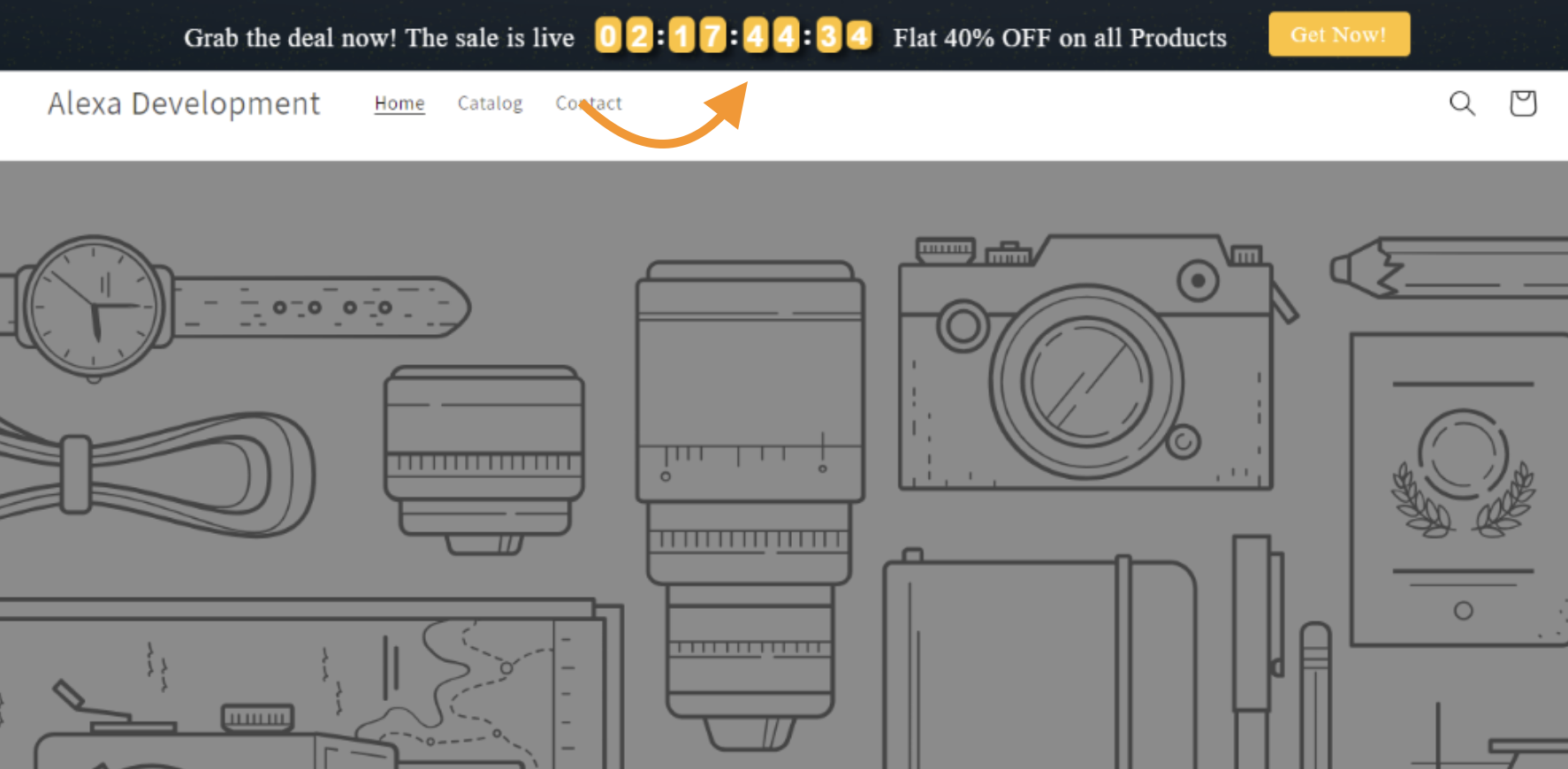
This method is highly useful in boosting your store’s performance largely during key sales periods and you can get sales on Shopify without ads.
3. Offer Multi-Channel Support and Engagement
Customers expect instant answers when they have questions browsing your store. They don’t want to wait for hours- or worse, days— for a response.
To keep up with customer’s expectations, give them multi-channel support so that they can reach out where they are most comfortable. Integrate tools like live chat and WhatsApp chat along with regular phone and email support.
To add the Whatsapp chat button on your storefront, you can use the Shopify Whatsapp Chat app. This way, customers can directly message your business via WhatsApp and you can give them real-time support without delays.
4. Improve Shopify Store SEO
Around 75% of users never scroll past the first page of Google. So, if your store is not optimized for SEO, you are missing out on a massive amount of potential traffic— and sales, too.
Shopify takes care of many SEO fundamentals automatically, like generating title tags that include your store name and ensuring your theme is optimized for social media sharing. Still, there’s a lot you can do to optimize your content for SEO:
- Title tags, meta descriptions, and URLs: You can manually edit these details for your blog posts, web pages, products and collections. Target relevant keywords and use phrases your customers are likely to search for.
- Alt text for images: You can optimize your images by adding relevant alt-text, helping them rank better in Google Image Searches.
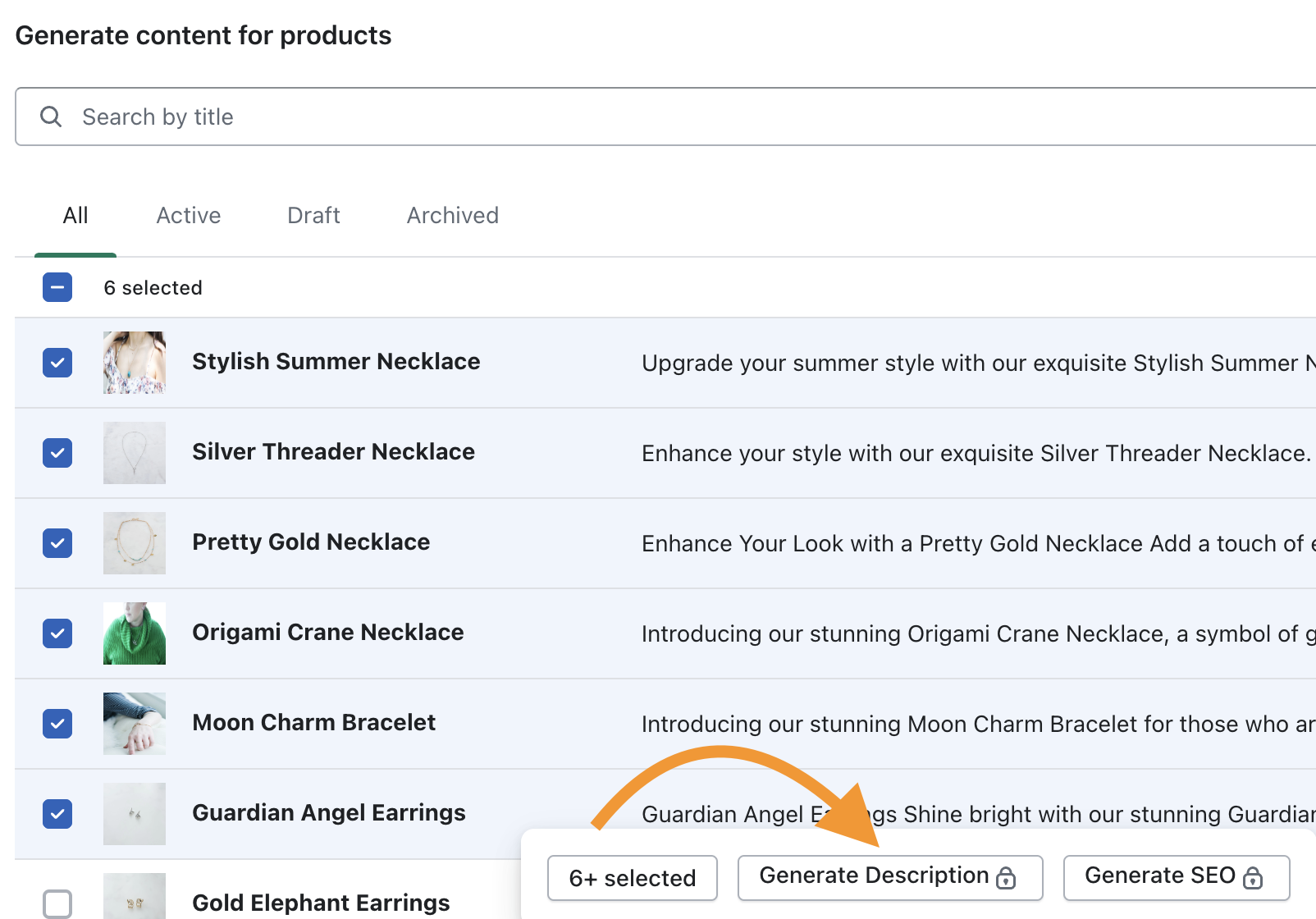
The Shopify AI Content Generator can be a game changer in this regard. It helps speed up content generation by bulk-generating product descriptions, collection details, SEO titles, and meta descriptions using AI. You can also customize the tone and prompts to align it with your brand’s voice.
5. Optimize for Mobile Shopping
Mobile shopping is no longer just a trend— it is one of the most common ways people shop online. The easier you make your store to navigate and purchase from mobile, the higher your conversion rates will be.
Here’s how to optimize and to sell more on Shopify for mobile success:
- Fast Load Times
- Simplified Navigation
- Position Your Product Photography Front and Center
- Minimize Text on Product Pages
- Influence Action with a Fixed ‘Add to Cart’ Button
By implementing these mobile-optimization tactics, your Shopify store can offer a smooth and mobile-friendly shopping experience.
6. Implement Targeted Sales Campaigns
Targeted sales campaigns involve creating personalized promotions that resonate with your specific customer segments, leading to higher engagement.
Moving from generic sales promotions and targeting specific groups with tailored offers can improve your ecommerce store’s sales performance.
To implement targeted sales campaigns, you can follow the mentioned tips:
- Segment Your Audience: Use customer data to group buyers based on behavior, preferences, and purchase history, enabling you to create highly relevant promotions.
- Retargeting Ads: Re-engage potential customers who have visited your site but didn’t purchase through personalized ads on platforms like Facebook and Instagram.
- Exclusive Discounts: Offer special deals for loyal customers, new subscribers, or high spenders, creating a sense of exclusivity.
- Geolocation Targeting: Use customer locations to send timely offers or drive local traffic, particularly through mobile apps.
- Promotion on Store: A promotion bar on a website is a horizontal banner, typically at the top of the page, used to highlight special offers, announcements, or calls to action to grab visitor attention and drive engagement. Shopify provide apps for promotion bar your online store to showcase irresistible deals and timely offers.
7. Encourage Social Sharing
Customers trust recommendations from friends and family far more than traditional ads. With social sharing, your customers can promote your products for you, tapping into their personal networks to boost your brand’s visibility. It’s free, organic marketing at its best.
But to encourage this type of sharing, you need to make the process as easy as possible for them. One effective way to do this is by adding social sharing buttons on your product pages.
The Shopify WhatsApp Share makes it incredibly easy for customers to share products with their contacts on Whatsapp.
With just a single tap, they can share product links, descriptions, and even pricing details directly from your store’s product pages. It is fully customizable, and you can set the message you want to send along with the product link.
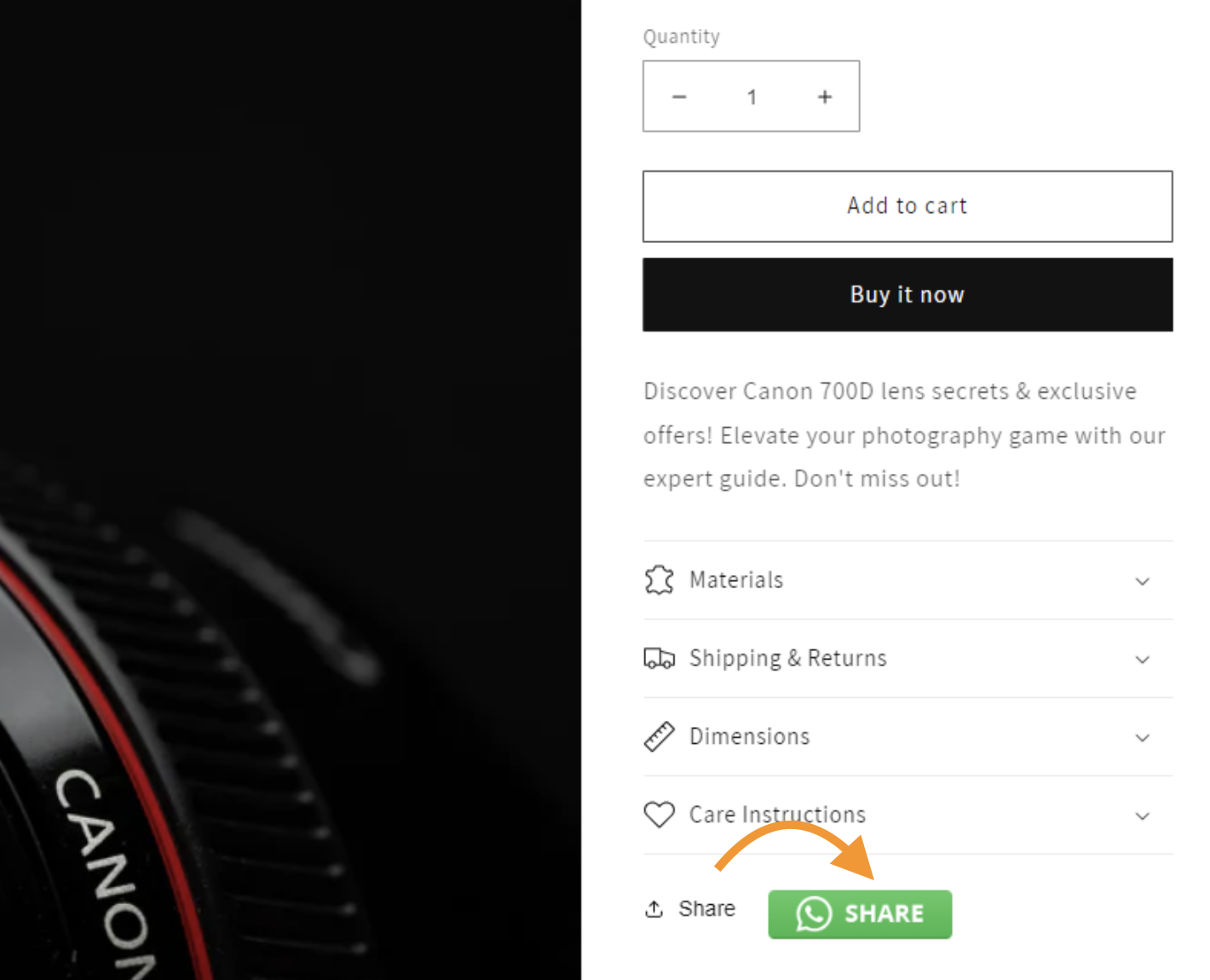
Such Shopify widgets transform how your shoppers connect with your store and interact to improve your conversion rate.
8. Simplify the Checkout Process
A primary reason for shopping carts being abandoned is an over-complicated checkout. When a shopper goes through too many steps, or is forced to create an account, the friction often leads them to discard their purchase entirely.
So, the key to reducing cart abandonment is simplifying your checkout process. The simpler and quicker the checkout process, the higher the chances of converting a shopper into a paying customer.
Firstly, reduce the number of steps needed to complete the purchase. Aim for a one-page checkout, where users can fill all their information in one go. Secondly, you can also offer guest checkout options so that shoppers can proceed even without creating an account.
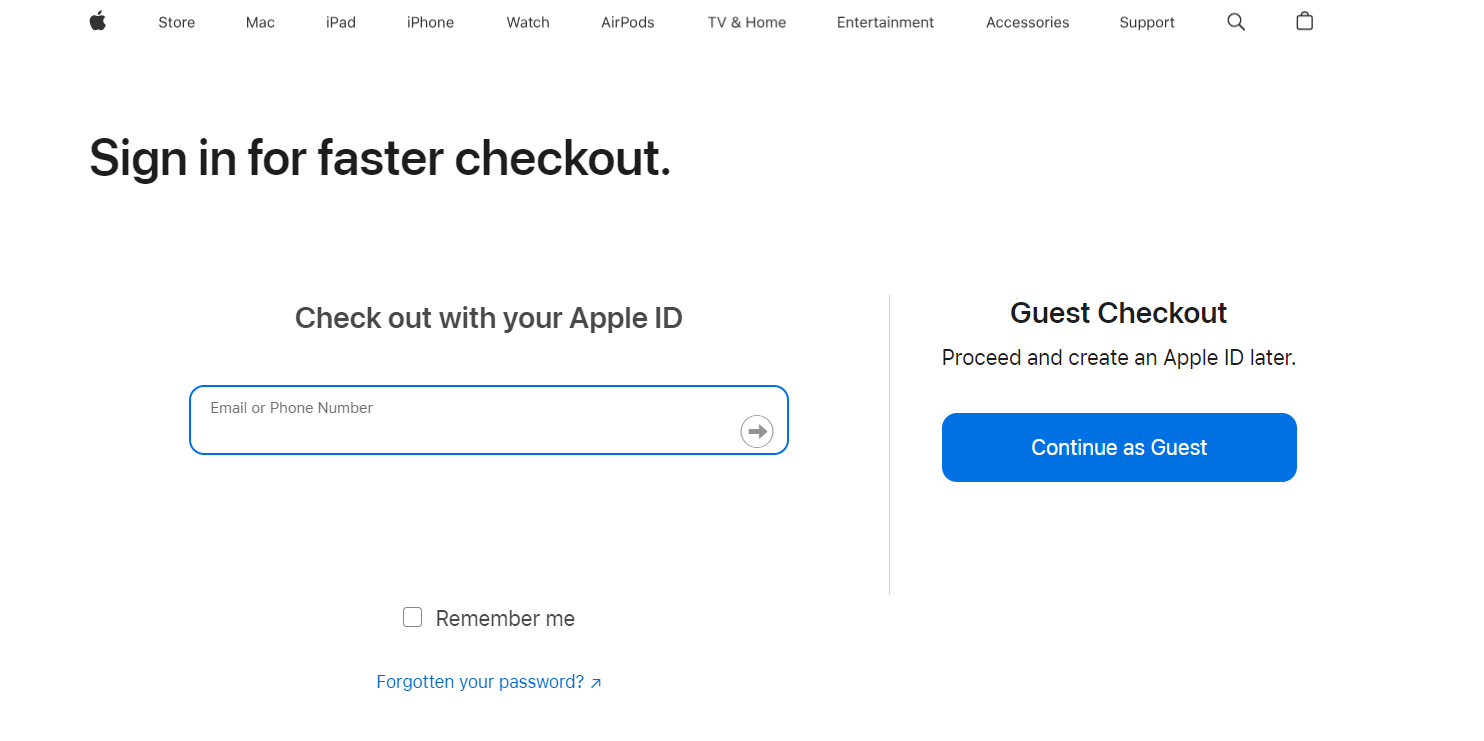
Here is our curated list of the best Shopify abandoned cart apps that help you re-engage with the shoppers who have not completed their purchase.
9. Offer Free Shipping and Different Payment Solutions
When customers see extra costs added at the checkout, it can lead to second thoughts. Offering free shipping, or at least setting a minimum order amount to qualify for free shipping, helps remove this friction.
Along with free shipping, providing multiple payment solutions ensures customers can choose their preferred method of payment. Some customers prefer to pay via PayPal, while others might use credit cards. Also, these days, shoppers are using digital wallets to make payments like Apple Pay or Google Pay.
10. Focus on Upselling and Cross-Selling
Upselling and cross-selling are the two most effective ways to increase your Shopify store’s average order value (AOV).
Upselling encourages customers to buy a higher-end version of the product they are already considering, while cross-selling suggests complementary products that go well with the items in their cart. For effective upselling and cross-selling, you need to place related product recommendations strategically on product pages and during checkout.
Here’s an example by Nike.
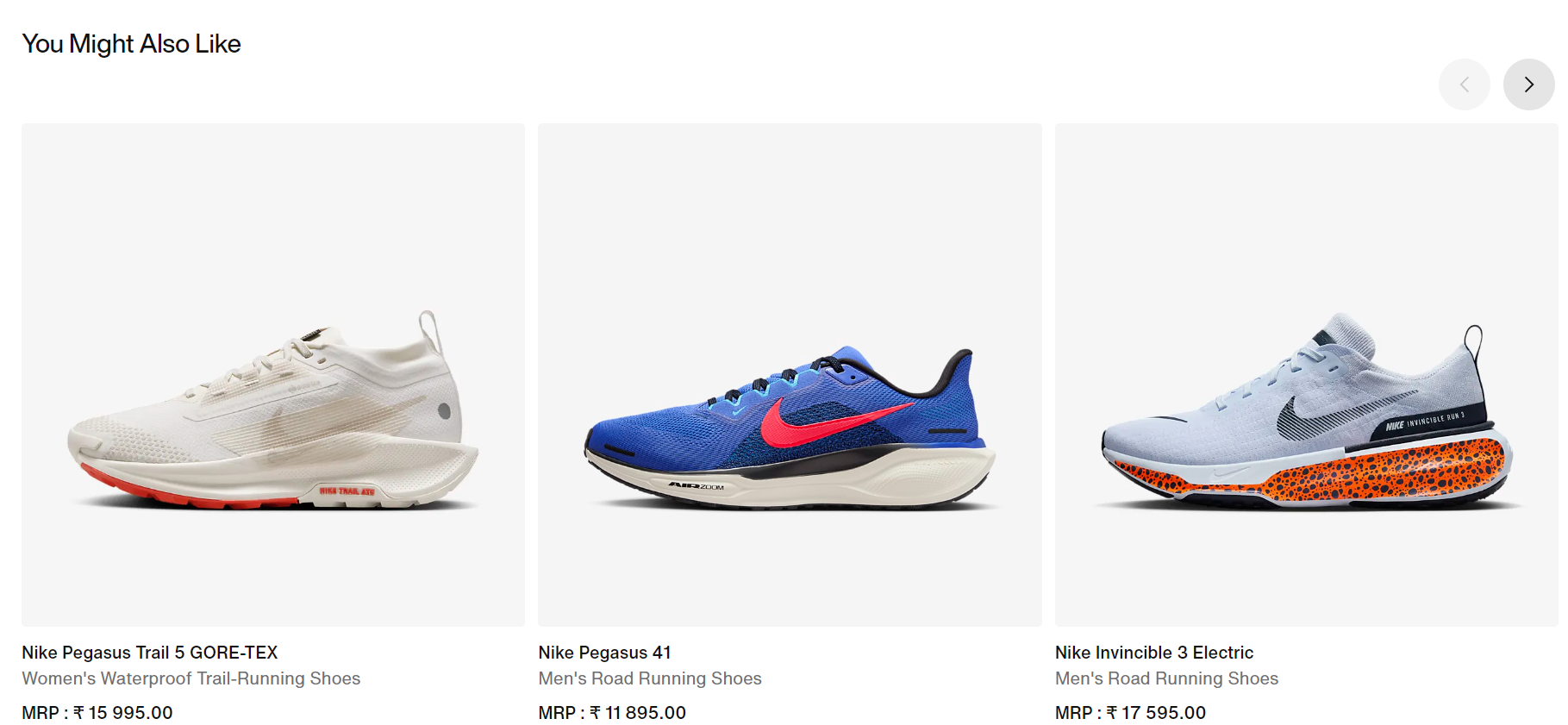
For upselling, Nike showcases higher end models such as better materials or limited edition designs.
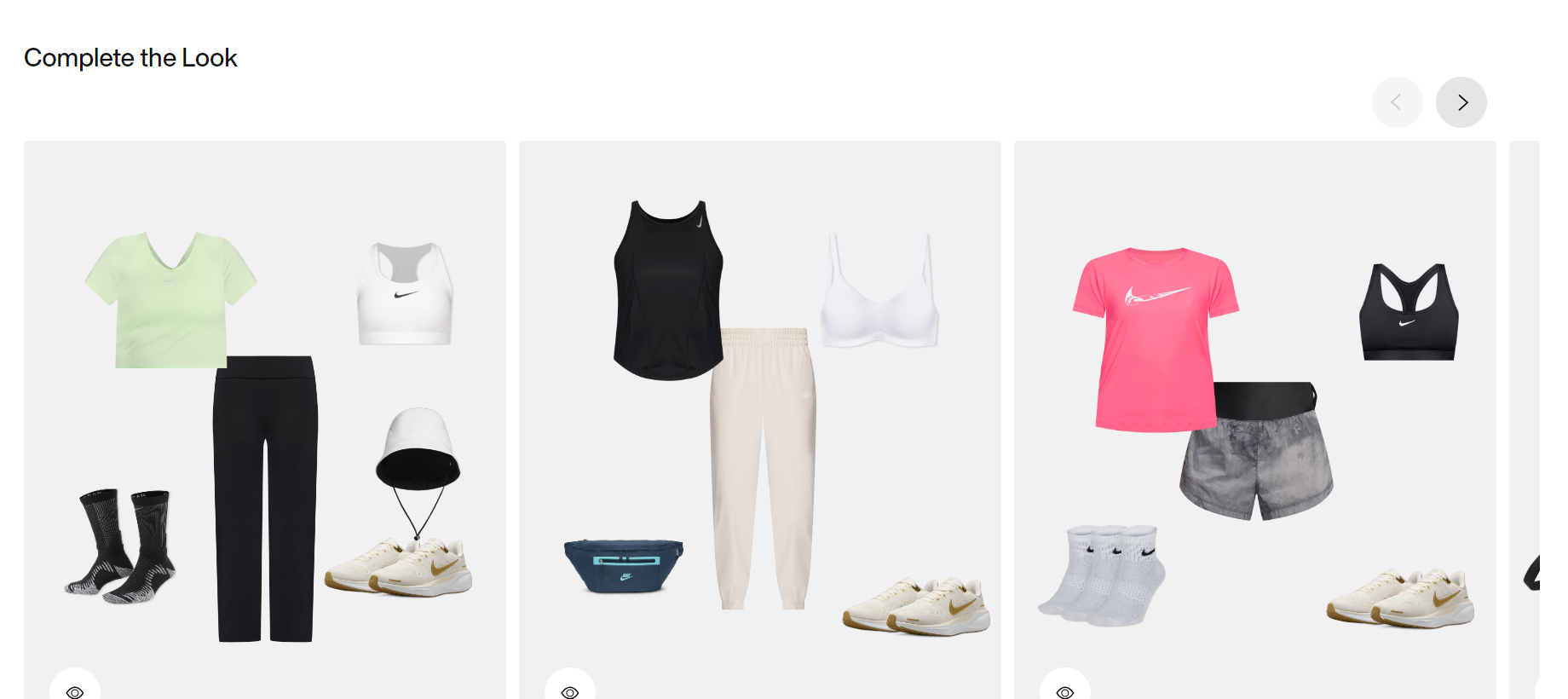
For cross-selling, Nike implements ‘Complete the look’ sections where they offer products that pair well with the original items.
You can also offer bundle deals to the customers by bundling related products together at a slightly discounted rate. This can entice customers to buy more than they have originally planned.
11. Run Email Campaigns
Email campaigns are a goldmine in keeping your Shopify store at the top of your customer’s minds. They are not only good for pushing promotions– but they are powerful for re-engaging customers and driving more conversions.
Some of the most effective types of email campaigns to improve conversion rate in Shopify include:
- Cart Abandonment Email Campaigns
- New Product Launch Campaigns
- Promotional Campaigns
12. Monitor and Analyze Performance
You can implement all the strategies in the world, but if you are not monitoring your store’s performance, you are lacking behind. Tracking key metrics of your store is important to understand what’s working and what’s not.
Also, when you have a clear view of your store’s data, you can make informed decisions to optimize it.
Here are some key metrics you should monitor:
- Conversion Rate: This metric tells how many visitors are actually turning into paying customers. A low conversion indicates issues with your site’s user experience, checkout process, or even product descriptions.
- Cart Abandonment Rate: This metric allows you to identify where customers are dropping off and address any potential pain points, like unexpected shipping feed or complicated checkout processes.
- Customer Lifetime Value (CLV): This metric measures the total revenue you can expect from a customer throughout their entire relationship with your brand. It helps you evaluate your retention strategies and optimize your marketing efforts for repeat purchases.
Make Small Changes for Better Results
Bringing in more sales for your Shopify store does not have to be complicated— by following the tips we have mentioned above, you can easily get more traffic and higher conversions for your online store.
These strategies may seem simple, but when executed effectively, they are proven to deliver great results. Each one works to enhance the shopping experience for your customers.
And remember, the right apps can make the process even smoother. So, are you ready to see real results? Explore and implement these Shopify apps today for a sales boost that lasts.