Shopify is a full-package ecommerce platform that enables businesses and entrepreneurs to easily create and manage their online store.
Started just a decade ago as a store to sell snowboards, Shopify has come a long way in establishing itself as one of the most popular ecommerce platforms.
In this blog, we will have a detailed overview of the Shopify platform and its other important aspects.
What is Shopify?
Shopify is an e-commerce platform that allows businesses to create, run, and manage their store without needing any technical expertise.

It has almost reduced the complexities that a business professional might come across while building the store (which is the core reason it is so loved).
You can perfectly sell physical goods, digital products, and dropships.
Shopify currently holds the fourth position in the world’s top e-commerce platforms and continues to improve itself to stay relevant by investing heavily in AI and predictive analytics to drive customer experience and automate the businesses as much as possible.
How Does Shopify Work?
Shopify is a subscription-based platform; it hosts your store on its server, and using its high-end features/functions, you can set up a Shopify store yourself.
Shopify handles security, inventory, checkout, and more so you don’t waste your time on the management but directly attract sales.
Developers are also allowed free rein to customize and extend the platform, as per their wish. Here is the list of core features and functions of Shopify.
Core Features of Shopify
Ease of use: No prior technical knowledge is required on the part of the user, as everything is handled by Shopify itself. So, business merchants can very quickly set up their stores and get down to business.
Easily managed: The user interface of Shopify is very easy to grasp using features like an automated calculator of shipping charges, taxes, and more.
SEO to boost sales: Shopify provides built-in tools for editing meta tags, titles, and URLs, making it easy to optimize web pages for search engines like Google.
Full proof security: Supports 3D secure authentication, adding extra layers of security for online payments. Additionally, two-factor authentications to prevent unauthorized access.
Core Functions of Shopify
Product Management: You can easily add, organize, and update product listings, so that the products can be properly displayed online.
Order & Checkout: The checkout process is smooth, secure, customizable, and supports multiple payment methods and in-store pickups.
Inventory Control: Checks the level of stocks both in the online and physical stores and automatically sends low-stock alerts wherever needed.
Marketing Tools: Shopify offers multiple integration and marketing tools to provide scalability as per the increasing demand of buyers.
Analytics & Reporting: Timely keep analyzing the performance of your store using the reporting dashboard in Shopify.
Shopify App Store: Offers 8000+ free and paid apps to add the needed functionality into your store without any coding.
Shopify Theme Store: Beautify your store’s look by using the range of Shopify themes that comes with a powerful theme editor.
Shopify Pricing Plans 2026
Shopify provides different plans based on the features.
There are plans suited for individuals who solely run their business, right up to small and medium scale businesses that have a comparatively higher level of operations.
Let’s learn more about the Shopify plans.
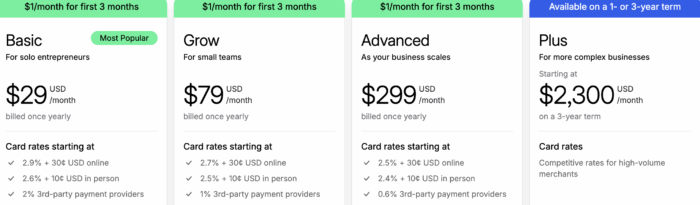
- Basic plan starts at $29/month best for starting your online presence.
- Growth plan starts at $79/month with reliable features for developments.
- Advanced plan starts at $299/month for businesses with advanced needs.
- Plus plan starts at $2300/month for enterprise-level businesses with unlimited control.
There are also Shopify plus plans that are suited for high volume businesses that have been established internationally and who experience rapid growth in a very short amount of time.
The pricing is a higher than the pricing which is discussed above. Additionally, it also varies if you are working with a Shopify Plus development service or building it yourself.
Many merchants look for a solution to start a Shopify store with no money but the truth of the matter is that it is not possible for a long run. Sooner or later you will have to opt for a Shopify plan.
Shopify Pros & Cons
Shopify is one of the most widely used ecommerce platforms in the world. But like all other platforms, it is not perfect. It has its advantages and disadvantages. It is advisable to know both the aspects before migrating to Shopify. Lets understand both one by one:
Pros of Shopify
- Beginner friendly interface with simple navigation and a smooth onboarding process, making it easy to set up its store without knowing the technical background.
- All in one platform to manage marketing, payments, inventory, analytics, shipping, and app tools within a single platform to run & grow an online store.
- Supports multiple languages, currencies, and shipping options for businesses with branches around the world.
- Offers security while processing payment processing and sharing security updates to keep your store intact.
- Provides Shopify marketplace and Shopify App store to add functionalities without writing complex code.
- Quality Shopify Plus agencies available in the market for complete store development.
Cons of Shopify
- High costs that merchants have to pay based on their business requirement. Additionally, the transaction charges applied if you don’t use Shopify payments.
- Content limits compared to other platforms like WordPress. Traffic will be low if content marketing is also one of the goals set by the company.
- No email hosting services, merchants might have to use third party email providers, which means extra costs.
Top Brands Using Shopify
Many famous international brands use Shopify on a daily basis. These companies are as diverse as beverage companies to fashion giants. Let’s take a look at some of these enterprises that feel at home with Shopify.
Taylor Swift
The famous American singer moved her website to Shopify in July 2023, launching her Eras Tour merch on the platform. The site became an instant hit and in a very short period of time, the store was handling huge traffic spikes and sales volumes.

Skullcandy
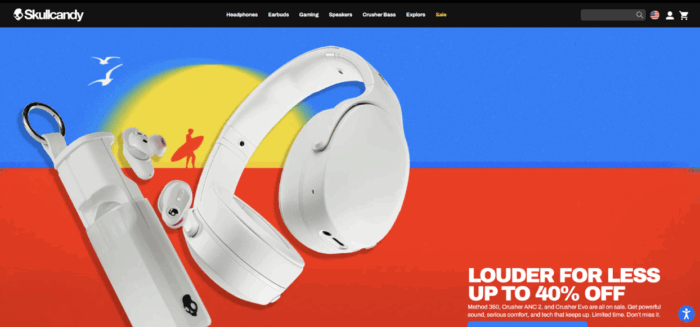
Skullcandy migrated to Shopify in early 2023 and instantly it felt the difference as its website loading speed decreased from 2.6 to 0.8. It can now launch new products in under 30 minutes which was one to two days previously.
Tropic Skincare
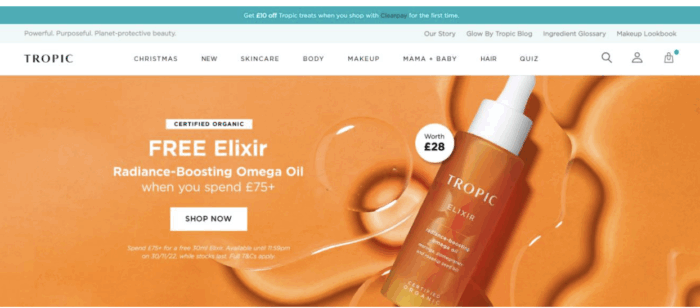
Its Shopify store provides a clean, vibrant and user friendly website experience. The store distinctly captures the brand’s values with its visuals of natural ingredients and easy navigation. The Shopify store looks as fresh as its natural products.
Shopify vs. Other Ecommerce Platforms
Now lets see how well Shopify fares when compared to its rival ecommerce platforms. Below is a detailed comparison between Shopify and its contemporaries in the market today.
| Feature | Shopify | Woocommerce | Adobe Commerce | BigCommerce | Wix |
| Best For | Startups to enterprise | Small to medium tech-savvy | Enterprise, dev teams | Mid-market & enterprise | Small businesses/ creators |
| Hosting | Fully hosted | Self-hosted (WordPress) | Self-hosted or cloud | Fully hosted | Fully hosted |
| Ease of setup | Very easy, fast | Requires wordpress and plugins | More technical, longer setup | Easy to moderate | Easy |
| Cost Structure | Monthly fee + Transaction fee | Free Core. Hosting and plug in costs | High development + hosting cost | Monthly fee + transaction fee | Monthly fees |
| Customization | High via themes & apps | Unlimited via plugins | Unlimited, developer-heavy | Good, fewer plugins | Limited to platform tools |
| Scalability | Excellent, plans for growth | Limited by hosting | Excellent, designed for scale | Excellent | Not ideal for large scale |
| Security | PCI compliant, SSL included | Depends on hosting/plug-ins | User-managed | PCI compliant, SSL included | SSL included |
| Support | 24/7 support | Community-driven | Enterprise support | 24/7 support | Limited support |
Shopify clearly stands out, compared to other platforms.
It is fully hosted and requires no prior skills. Unlike Woocommerce and Magento that demand technical expertise for updates and security, Shopify does all this on its own.
With its high degree of customization, fast servers, security features, built-in SEO and inventory tools, and scalable plans to reflect the growth of the company, Shopify provides an all round service that is unparalleled.
Many online merchants confuse Shopify with Shopee; they are completely different platform.
Frequently Asked Questions
Is Shopify Free to Use?
No. While Shopify does provide a free trial period, its continuous use requires you to buy a shopify plan. Its prices range from $5 a month for smaller businesses to $2300 per month for big enterprises.
What Can I Sell on Shopify?
You can sell anything you like on Shopify. From clothing and apparel, jewellery and watches to food and beverages, and home and garden products. You can sell anything you want on Shopify. Just bear in mind that it should be legal.
How to Use Shopify?
You need to set up a Shopify account and select a pricing plan and set up your online store using a simple dashboard. All that remains is to add the products and the payment methods and you can start using Shopify.
Does Shopify require Coding?
The store set up and customization can be done using simple navigations. However, for advanced customizations, knowing programming languages like Liquid, HTML, CSS, Javascript etc is a must.
Start Your Shopify Store Journey for $1
Shopify platform is a must have for all businesses – whether they are start-ups or are well established. The benefits that Shopify provides, compared to other platforms, are incomparable and unique.
Shopify is not just here to stay but to rule the ecommerce market.
Take a free trial of Shopify and continue using the platform for only $1 for 3 months.
Grab Now