Referral marketing is one of the highest-return marketing strategies.
But how has referral marketing changed over the years, and how can it be used effectively in your marketing strategy?
We’ve gathered some of the top referral marketing statistics, which will give you an insight into how this strategy has evolved and, most importantly, whether it still makes an impact.
Top Referral Marketing Statistics
In this section, you’ll find the top-most referral marketing statistics showing why it’s still one of the most effective marketing strategies for businesses.
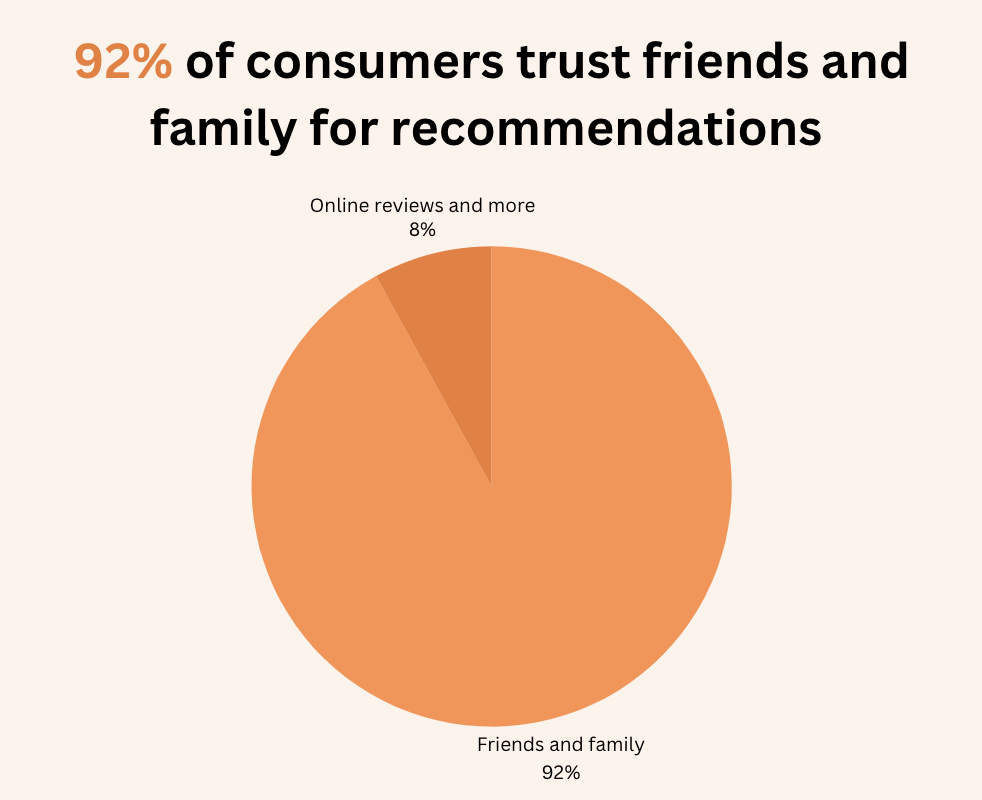
- 92% of consumers trust recommendations from people they know more than any other type of advertising.
- Happy customers share their positive experiences with an average of 9 people.
- Companies with referral programs experience 71% higher conversion rates than those without referral programs.
- Referred customers have a 25% higher lifetime value than customers acquired through other channels.
- People are 4 times more likely to purchase when referred by a friend.
- Referred customers demonstrate 18% more loyalty than customers acquired through other marketing channels.
- The average customer spends 13.2% more when they’ve been referred by an existing customer.
- Approximately 83% of happy customers are open to recommending products or services, but only 29% follow through with a referral.
- Referral leads achieve a 30% higher conversion rate compared to leads generated through other marketing methods.
Key Takeaways:
Referral marketing is highly effective, with referred customers showing higher trust, loyalty, spending, and conversion rates. However, businesses must encourage more referrals to leverage this strategy fully.
B2B Referral Marketing Statistics
In B2B, referral marketing is seen as a powerhouse for getting new customers and increasing the brand’s power. And here’s some B2B referral statistics we’ve found:
- 65% of new business opportunities in B2B arise from referrals.
- 78% of B2B marketers agree that referrals are the highest quality lead source.
- B2B firms with established referral programs experience 86% more revenue growth than those without referral programs.
- Customers referred to B2B companies are 50% more likely to make repeat purchases.
- Between 20-50% of B2B decision-makers say that word-of-mouth referrals are a major factor in their purchasing decisions.
- For 82% of small businesses, referrals are their primary source of advertising and income.
- One of the leading generation statistics report said 54% of B2B referrals are found to be more cost-effective than other lead generation methods.
Key Takeaways:
Referral marketing is crucial for B2B success because it helps them bring significant revenue growth, repeat purchases, and higher-quality leads.
Word of Mouth Referral Marketing Statistics
Studies show that word-of-mouth marketing can significantly outperform traditional advertising methods in terms of effectiveness. Here are some word-of-mouth referral statistics to illustrate its impact.
- 90% of people trust recommendations from people they know, while only 33% trust online advertisements.
- Word-of-mouth drives $6 trillion in annual global consumer spending and accounts for 13% of all consumer sales.
- Customers acquired through word-of-mouth have a 37% higher retention rate compared to other channels.
- Word-of-mouth marketing generates 5x more sales than paid advertisements.
- Customers who come through word-of-mouth marketing spend 200% more than the average customer.
- Word-of-mouth recommendations influence 74% of consumers’ buying decisions.
- 91% of B2B buyers are influenced by word-of-mouth when making their buying decisions.
Key Takeaways:
Word-of-mouth referrals are incredibly powerful, as with referred customers, they show higher trust, loyalty, and lifetime value.
Referral Marketing Statistics by Industry
In this section, you’ll see how different types of businesses use referral marketing and what results they get. Let’s look at the most interesting statistics across various industries:
- In the financial services industry, referred customers are 4x more likely to refer other customers to the bank.
- Healthcare providers report that 92% of consumers trust referrals from people they know, making it the most trusted form of marketing in healthcare.
- In the real estate industry, 75% of an agent’s business comes from referrals and word of mouth.
- For SaaS companies, referral programs reduce customer acquisition costs by up to 25% compared to other marketing channels.
- In the beauty and cosmetics industry, 82% of customers make purchase decisions based on recommendations from friends and family.
- For professional services firms, 85% of their new business comes from referrals.
Key Takeaways:
Referral marketing performs well across all industries, with a particularly high impact in professional services, real estate, and financial sectors. The data shows that referred customers consistently bring better conversion rates and higher loyalty across different business types.
Employee Referral Program Statistics
Employee referral programs help companies find great new workers, and while going through them, we’ve seen some interesting statistics about employee referrals:
- 88% of employers say employee referrals are their best source for above-average candidates.
- Employee referral programs reduce hiring costs by up to 50% compared to traditional hiring methods.
- Referred employees stay with companies 70% longer than non-referred employees.
- 45% of referred employees stay for more than 4 years, compared to 25% of employees from job boards.
- Companies with employee referral programs see 46% higher retention rates.
- Employee referrals save companies an average of $7,500 per hire.
Key Takeaways:
Employee referral programs significantly reduce hiring costs and attract higher-quality candidates who stay longer, making them one of the most effective recruitment strategies.
Referral Marketing Channel Statistics
In this, you’ll find which marketing channels work best for referrals. Here are the most important statistics we’ve gathered:
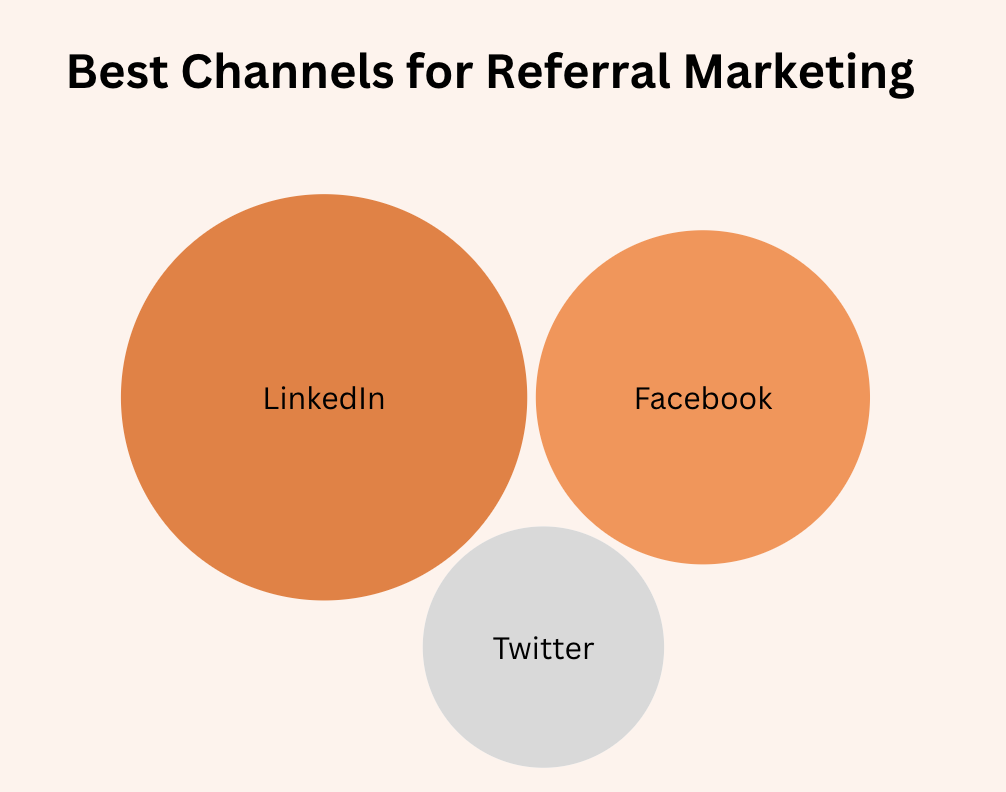
- 80% of B2B referrals come through LinkedIn.
- Facebook accounts for 45% of social media referral traffic.
Key Takeaways:
Mobile and social channels dominate referral marketing, with professional networks like LinkedIn leading B2B referrals while messaging apps and social media drive consumer referrals.
Referral Reward Statistics
Now, let’s talk about some referral reward statistics, as it will give you an understanding of the best referral programs. Here are the key statistics:
- Double-sided rewards are the best way to increase referral program participation.
- 50% of consumers say monetary rewards motivate them to make referrals.
- 82% of Americans want some sort of incentive for sharing a product.
Key Takeaways:
Double-sided rewards and cash incentives prove most effective in referral programs, with higher-value rewards directly correlating to increased participation and conversion rates.
Referral Marketing Conversion Rate Statistics
In this, we will highlight how well referral marketing converts into sales. Here are the key conversion statistics:
- Referred customers convert 30% better than non-referred leads.
- Referral leads close 69% faster than non-referral leads.
- The average referral program conversion rate is 2.35%.
- Referred customers have a 37% higher retention rate.
- Mobile referral programs convert 4.2x better than desktops.
- Social media referrals have a lower 1.5% conversion rate.
- In the US, smartphones account for 70.5% of the referral traffic to e-commerce websites, while desktops and laptops account for 19.5% and 10%, respectively.
Key Takeaways:
Referral marketing consistently outperforms other channels in conversion rates, with B2B and mobile referrals showing particularly strong performance.
Trends in Referral Marketing
Now, let’s check what’s new in referral marketing and how it’s changing. Here are some of the latest trends we’ve found over time:
- 66% of brands are integrating social proof with referral marketing as it directly relates to buying decisions.
- 75% of companies are using automation in their referral programs.
- Video testimonials in referral programs increase conversion by 88%.
- Customers focus more on review websites and forums before buying products and services, showing the importance of having positive reviews.
- 70% of businesses using gamified referral programs report higher engagement.
Key Takeaways:
Referral marketing is becoming more technology-driven, with AI, automation, and mobile-first approaches leading the way. But, personalization and omnichannel strategies are also becoming important.
The Right Strategy for 2026
After looking at all these referral marketing statistics, one thing is clear: people trust their friends and family more than any fancy advertisement!
The stats clearly show that referred customers stay longer, spend more, and are happier with their purchases. Whether running a small online shop or a big company, having a referral program can help your business grow.
Remember, the best marketing isn’t about shouting the loudest, but it’s about getting your satisfied customers to share their amazing experiences with others.
Sources: Nielsen, Deloitte, Influitive, Texas Tech, Statista, Word of Mouth Marketing Association, Marketingcharts, Invespcro, DemandBase, Flyy, Salesforce, Space 48, Wharton, Zippia, LinkedIn, Eqorefer, Erinapp, Sibmbengaluru, Kurve, Brightlocal, Referral Factory, Ambassador, Harvard business review, Prefinery,Mobiloud, Statista, Ruler Analytics, Retail TouchPoints, Wyzowl, Social Media Today, McKinsey